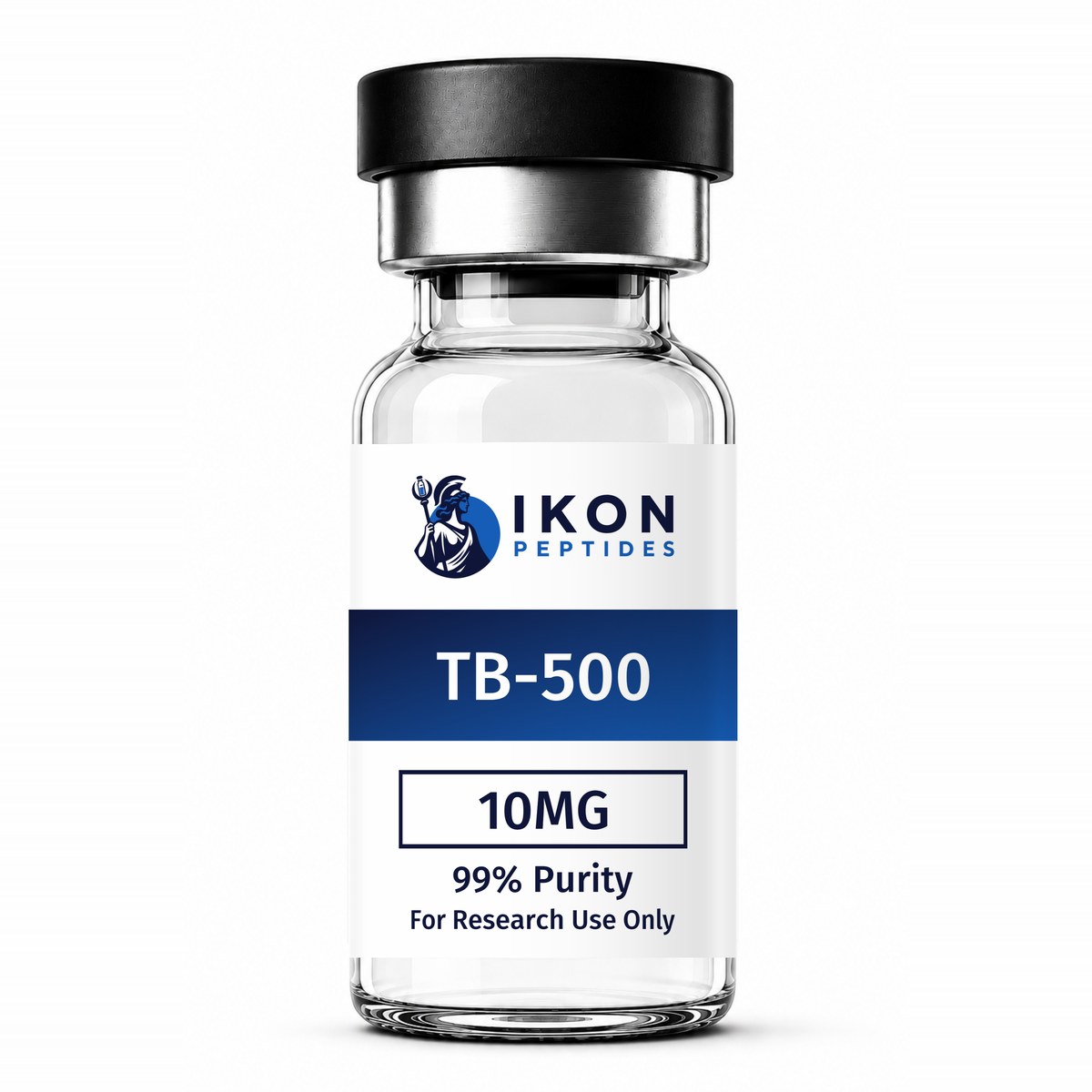
TB-500 10MG

$42.00

TB-500 is a synthetic version of Thymosin Beta-4, a 43-amino-acid protein identified in most mammalian cell types.

Its characterized molecular function is actin sequestration: it binds G-actin monomers and regulates their polymerization into F-actin, the process that governs cell motility and cytoskeletal reorganization. That mechanism is distinct from BPC-157, which is studied for angiogenic signaling, and the two sequences are frequently examined together in comparative research protocols.

Researchers study TB-500 in:

  • G-actin binding and sequestration assays
  • Cytoskeletal reorganization studies
  • Cell migration models
  • Comparative studies with BPC-157
  • Peptide stability and formulation research

For research use only. Not for human or veterinary use.

SKU: BT10 Category: Tag:
MECHANISM

MECHANISM

How Does It Work?

TB-500 works through a different mechanism than most healing peptides. Rather than triggering growth factors directly, it works at the cellular movement level making repair faster by moving the right cells to the right place:

Actin Regulation — Cell Mobilization Tissue Repair Across Multiple Types
TB-500’s main mechanism is actin sequestration. it binds to actin, the protein that controls cell movement and shape. This allows damaged tissue cells to reorganize and migrate to injury sites faster than normal. Think of it as clearing the road so repair crews can get through. Unlike peptides with a narrow application, TB-500 has been studied across muscle tears, tendon injuries, ligament damage, skin wounds, and cardiac tissue. Its cell migration mechanism works regardless of tissue type  making it one of the most versatile repair peptides in research.
Inflammation Reduction New Blood Vessel Support
TB-500 consistently reduces inflammatory markers in research models. Less inflammation means the repair process can proceed without interference — and less scar tissue forms as a result. Studies show narrower, cleaner wound healing compared to untreated controls. Alongside BPC-157, TB-500 supports angiogenesis — the formation of new blood vessels at injury sites. This brings oxygen and nutrients to where repair is happening, accelerating recovery timelines in research models.
Reduced Scar Formation Neuroprotective Effects
In wound healing studies, TB-500-treated tissue showed significantly less scarring compared to control groups. Wounds healed narrower, faster, and with better tissue quality. Emerging research suggests TB-500 may support nerve regeneration and protect against neurological damage including in stroke and traumatic brain injury models. An area of growing interest in current research.

The reason TB-500 and BPC-157 are so commonly studied together: they work through entirely different pathways that complement each other. BPC-157 builds the blood supply. TB-500 moves the repair cells. Together, they cover the full repair sequence.

PHYSICAL PROPERTIES

PHYSICAL PROPERTIES

Key specifications for handling and storage in laboratory settings:

   
Full Name Thymosin Beta-4 fragment (synthetic analog)
Amino Acids 42 amino acids
Molecular Weight 4,963.5 g/mol
Form White lyophilized powder
Solubility Water-soluble
Purity 98%+ (HPLC verified)
Administration Subcutaneous injection
Storage Refrigerated 36-46 F (2-8 C). Protect from light. Avoid freeze-thaw cycles.
Stability 24 months lyophilized. Use within 30 days once reconstituted.
POTENTIAL SIDE EFFECTS IN RESEARCH

POTENTIAL SIDE EFFECTS IN RESEARCH

TB-500 has a strong safety profile across preclinical and early clinical research. A 2021 review of Thymosin Beta-4 research concluded it was ‘well tolerated and safe in healthy subjects.’ Side effects are generally mild and infrequent.

Injection Site Irritation Mild Fatigue or Lethargy
The most commonly reported observation. Mild redness, discomfort, or swelling at the injection site. Typical of peptide administration and resolves without intervention. Some subjects report temporary fatigue after administration, particularly early in a protocol. Generally short-lived and not dose-limiting.
Lightheadedness Mild Headache
Temporary lightheadedness shortly after injection has been noted in some subjects. Mild and transient in all documented research cases. Occasionally reported at higher concentrations. Resolves on its own without intervention in documented research observations.
Mild Nausea Theoretical Angiogenesis Consideration
Rarely observed. Mild and transient when reported. More common at elevated doses in research protocols. As TB-500 promotes cell migration and blood vessel growth, researchers designing protocols for subjects with active malignancy should account for this theoretical consideration.

No serious adverse effects have been documented at standard research concentrations. TB-500 has an established track record in veterinary medicine spanning decades, contributing to its well-characterized safety profile.

DISCLAIMER

DISCLAIMER

This product is exclusively for laboratory research. Not approved for human or veterinary use.
All products sold by Ikon Peptides are intended exclusively for in-vitro laboratory research. Not approved for human consumption or veterinary use. These statements have not been evaluated by the FDA.

Shipping and Delivery

MAECENAS IACULIS

Vestibulum curae torquent diam diam commodo parturient penatibus nunc dui adipiscing convallis bulum parturient suspendisse parturient a.Parturient in parturient scelerisque nibh lectus quam a natoque adipiscing a vestibulum hendrerit et pharetra fames nunc natoque dui.

ADIPISCING CONVALLIS BULUM

  • Vestibulum penatibus nunc dui adipiscing convallis bulum parturient suspendisse.
  • Abitur parturient praesent lectus quam a natoque adipiscing a vestibulum hendre.
  • Diam parturient dictumst parturient scelerisque nibh lectus.

Scelerisque adipiscing bibendum sem vestibulum et in a a a purus lectus faucibus lobortis tincidunt purus lectus nisl class eros.Condimentum a et ullamcorper dictumst mus et tristique elementum nam inceptos hac parturient scelerisque vestibulum amet elit ut volutpat.